

The Anunnaki in the Sumerian record — and in modern retellings
The Anunnaki appear throughout Sumerian and Akkadian literature. What those texts say about them differs sharply from what the modern popular account claims they say.
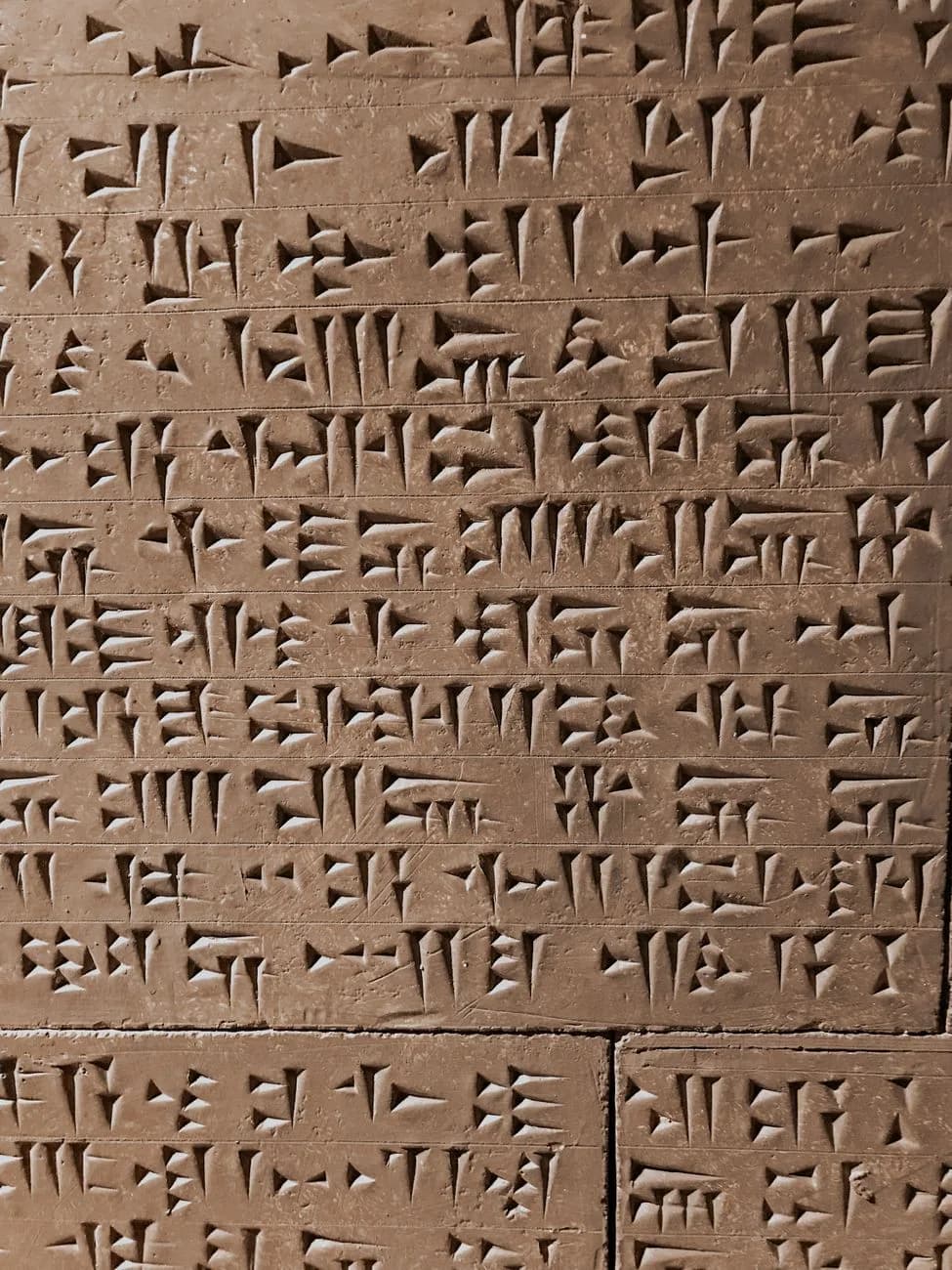
Photo by Bilge Şeyma Kütükoğlu on Pexels
The Anunnaki are real in the sense that matters to a historian: they appear by name across a substantial body of Sumerian and Akkadian literature, in texts that have been excavated, catalogued and translated by Assyriologists for well over a century. The tablets exist and can be read.
What is contested is not their existence in the record but what the record says. The modern popular account and the philological one diverge almost immediately, and the divergence is documentable rather than a matter of opinion.
What the texts describe
In the Mesopotamian material the Anunnaki are a class of deities — the name is generally understood as something close to "offspring of An", the sky god. They appear in the Atrahasis epic, in Enuma Elish, and in a range of hymns and administrative-religious texts, functioning as an assembly of gods with roles in judgement and in the ordering of the world.
The Atrahasis narrative includes an account of humanity being created to take over labour previously performed by lesser gods. This is the passage the modern account most often draws on, and it is genuinely there. It is a theological account of why people work, of a type well attested across the ancient Near East.
Why this one is checkable
Most disputes in this field cannot be settled because the primary evidence is missing. This one is unusual: the tablets are held in museum collections, the sign values are published, and the lexical corpus is available to anyone willing to work through it.
That makes it a question of philology rather than belief. Assyriologists who have addressed the popular claims directly have done so by returning to the signs on the tablets, and the disagreement can be followed line by line by a reader who does not know Sumerian.
None of which makes the actual material less interesting. A civilisation that wrote down a story about being created to do the gods’ work, and preserved it for two thousand years, is worth reading on its own terms — which is roughly the opposite of the treatment it usually receives.
Join the discussion
Still open on this one:
- 01
How much of the Sumerian corpus remains untranslated?
Large numbers of excavated tablets have never been fully published.
- 02
What does the term rendered as Nibiru actually denote in the texts?
It appears in astronomical contexts; the specialist reading differs from the popular one.
- 03
Why did the Sitchin reading spread so much further than the scholarly one?
A question about publishing and audience rather than about Mesopotamia.
Be the first to comment
Sources
Open them and check for yourself. Where a record is public, it is linked.
The Electronic Text Corpus of Sumerian Literature
University of Oxford
Cuneiform Digital Library Initiative
CDLI
Related

Government Disclosure
UFO Experts Explain Why Disclosure Is Finally Breaking Open
UFO Experts Explain Why Disclosure Is Finally Breaking Open — via Best of Danny Jones.
Secret Societies
Secret Societies In The Shadows: The Freemasons
The oldest and most documented of the secret societies — and the gap between what is recorded and what is claimed.
0 comments
Sign in to join the discussion. Free, no subscription.